Most of the year you don't think about your furnace at all, and that's how it should be. But when the cold comes back, it's worth paying a little attention to how it's behaving.
Here are some everyday signs that a furnace could use a professional look. None of these means something terrible is going on. They're simply good reasons to call someone who can check it properly.
Safety first: two situations that are not "wait and see"
Before the list, two things to know:
- If you smell gas, leave the house right away. Don't flip switches or use anything that could spark. Call 911 or your gas company from outside.
- If a carbon monoxide alarm sounds, or you feel unwell with headaches, dizziness or nausea that ease when you leave the house, get everyone outside and call 911 from outside.
For more on this, see our carbon monoxide safety guide. Everything below is for less urgent situations.
Signs worth a call
The house heats unevenly. If some rooms stay cold while others are warm, it can point to an airflow issue. A dirty filter is a common and simple cause, which you can check in your furnace manual.
Your thermostat and furnace don't seem to agree. You raise the temperature and nothing happens, or the furnace runs but the house doesn't warm up.
The furnace turns on and off a lot. Short bursts of running, over and over, are worth having checked.
New or louder noises. Banging, rattling, squealing or grinding that you haven't heard before. A little noise when it starts up is normal, but a sound that's new to you is worth a call.
It takes a long time to start. If the furnace is slow to come on or doesn't light the first time, have someone look at it.
Odd smells. A brief dusty smell the first time you run the furnace after a long break is common. A smell that sticks around, or anything that makes you think of burning or gas, is not. If you smell gas, see the safety note above.
Rust, soot, stains or moisture around the furnace. If you notice marks near the furnace or its vent pipe, or water pooling nearby, please don't ignore them.
The filter is very dirty. A clogged filter makes the furnace work harder. Changing it on schedule is a safe and helpful homeowner job.
It hasn't been looked at in a while. If you can't remember the last time the furnace was started up and checked, you're a good candidate for a visit. The CDC recommends having your heating system serviced by a qualified technician every year.
What you can safely do yourself
- Change the filter on the schedule in your furnace's manual.
- Keep the area around the furnace clear of boxes, paint, laundry and anything stored against it.
- Keep your registers and return vents open and unblocked.
- Test your CO alarms monthly.
What to leave to a pro
Please don't open the burner area, remove panels, adjust gas parts or attempt repairs on your own. That's work for a qualified professional. If you're unsure, a phone call costs nothing, and we're happy to talk it through.
What a furnace startup visit looks like
When we start up a furnace, we start and test it, check thermostat response, check the filter and airflow, check ignition and the heating cycle, run a carbon monoxide test, and do a visual check of the accessible venting and flue. You get a completed written checklist with what we checked, the actual CO readings, and any concerns or recommended follow-up.
To be clear about the limits: a startup visit does not include a heat-exchanger inspection, and parts and repairs are separate. We'll talk with you before doing anything extra.
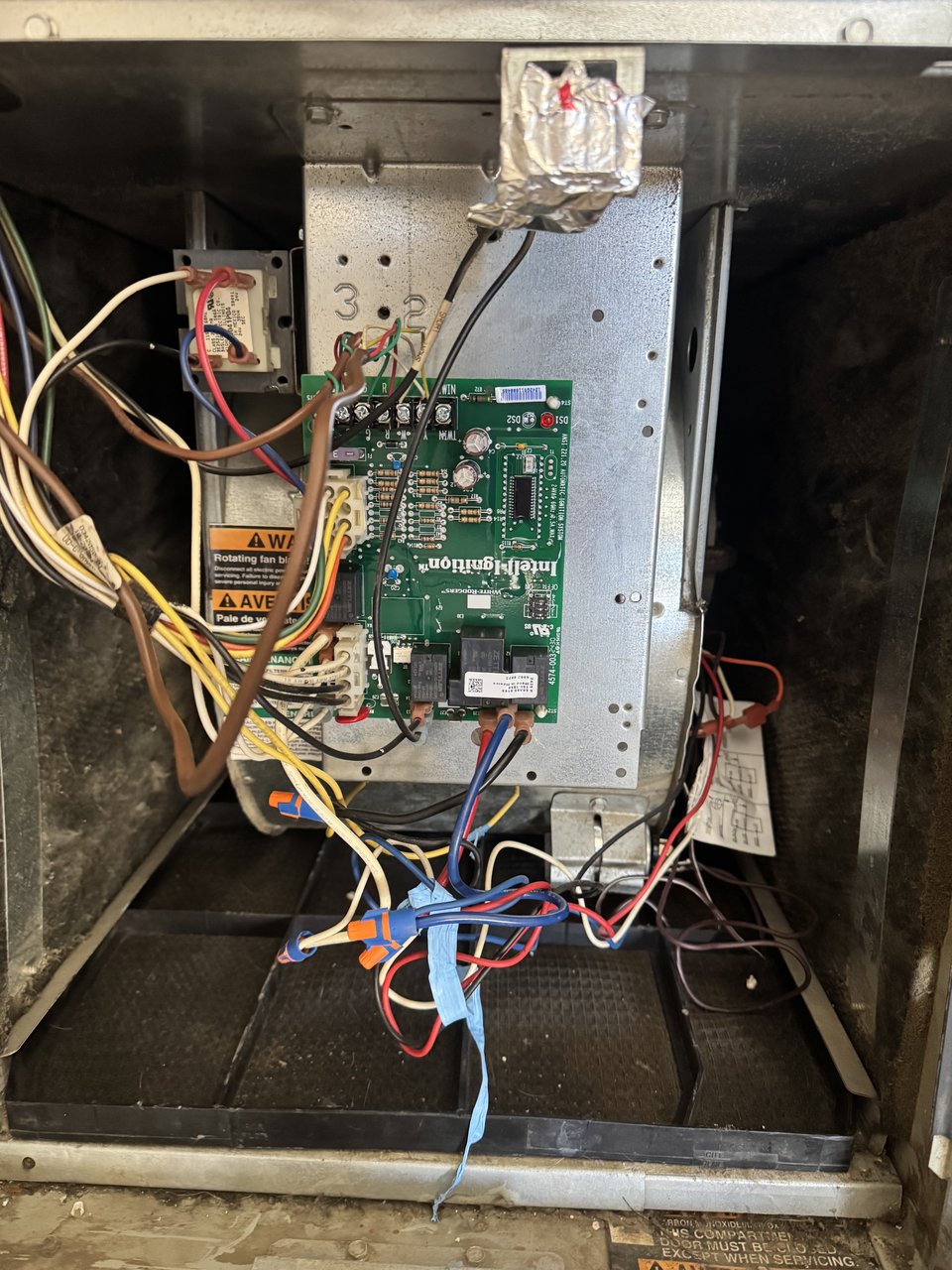
Not sure? Just ask.
If something sounds familiar, or you just have a feeling, give us a call or text. We're open 24 hours, and we reply to calls and texts within about 10 minutes. Letting us know about any existing problems helps, and so do photos.
Call or text Arrow Ridge Contracting: (505) 977-1880
Serving Albuquerque, Rio Rancho, Bernalillo and surrounding areas. Arrow Ridge Contracting LLC · Licensed, insured and bonded.
Source: CDC, "Carbon Monoxide (CO) Poisoning Basics," https://www.cdc.gov/carbon-monoxide/about/index.html (checked Nov 14, 2026). General information only; it doesn't replace a professional inspection.